I've had the privilege of overseeing SeerPharma's interactions with our clients for over a decade. During that time, I've been fortunate to observe organisations of every size navigating the challenges of Quality and GMP compliance. Those experiences have shaped the views shared below. They are entirely my own, although I suspect they may resonate with many others working in our industry.

Imagine you're shopping for a new television.
You walk into your local electronics store and find yourself standing in front of a wall filled with TVs. Thankfully, they're organised by screen size, so you know where to begin. Within your chosen size category are four televisions from different manufacturers. At first glance, they all look remarkably similar - but each carries a noticeably different price tag.
Like most consumers today, you immediately pull out your phone and start reading online reviews. You may even consider asking the salesperson for advice, although you're not entirely convinced it will help.
Before long, a clear pattern emerges. The most expensive television consistently receives the highest ratings, while the cheapest model, although still generally well-reviewed, has a higher proportion of complaints. The higher price reflects greater investment in quality, reliability and customer experience.
This relationship exists across most industries. Organisations that invest more heavily in quality (Q) can often command higher prices (P) because customers recognise—and are willing to pay for—that additional value. From a basic economics perspective, superior quality shifts the demand curve (D) to the right.
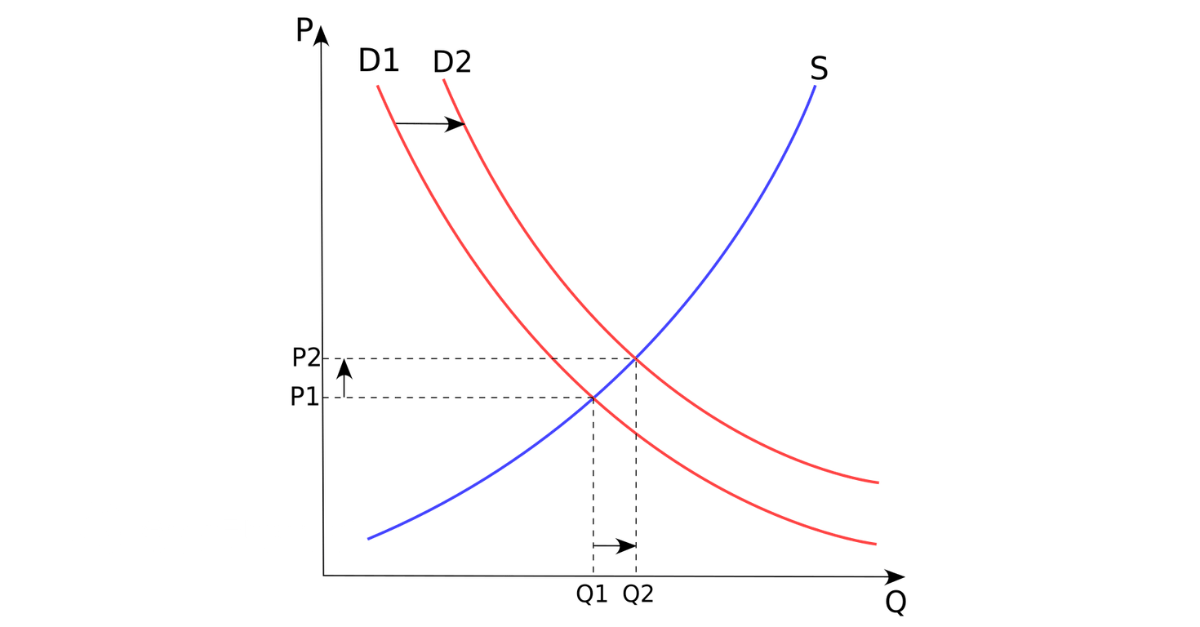
Unfortunately, the Pharmaceutical and Medical Device industries operate very differently.
Here, prices are rarely determined by the end user or patient. Instead, they are influenced by governments, reimbursement agencies, insurers, hospital procurement teams, wholesalers and distributors. These stakeholders generally assess product quality through one primary lens:
Is the product compliant?
Is the pharmaceutical manufactured in accordance with GMP?
Is the medical device appropriately certified by a Notified Body?
If the answer is yes, the product is considered acceptable for market access.
Is it any wonder our industry terms this "Market Access Economics"?
The message this sends back to manufacturers is subtle but powerful. If the market only rewards compliance, organisations naturally begin treating their Quality function primarily as a Compliance function.
But Quality is far more than Compliance.
The best way of illustrating the difference between Quality and Compliance is to return to the analogy of purchasing a TV.
When purchasing a TV, you don't reward a manufacturer simply because the product won't explode when you plug it in. You already expect that. Compliance represents the minimum acceptable standard. It is the ticket to participate in the market—not the reason customers choose one product over another.
The same principle applies in pharmaceuticals and medical devices. GMP compliance should be viewed as the foundation, not the destination.
So why does maintaining GMP compliance continue to create so many challenges?
Around the world, regulators and Quality professionals continue to identify recurring issues, including:
-
Data Integrity failures
-
Poor or incomplete investigations into Quality events
-
Unclear roles and responsibilities
-
Inadequate validation planning
-
Weak governance over manufacturing equipment and computerised systems
-
Poorly controlled change management processes
These observations are not isolated problems. They are symptoms of a much larger systemic issue.
In my view, the underlying root cause is not a lack of regulations. It is the allocation of capital.
Too often, executive teams do not provide the Quality function with sufficient resources, people or technology to unlock its full value within a regulated business.
To be clear, I don't blame Finance.
The role of the CFO is to allocate capital where it delivers the greatest commercial return while ensuring the long-term viability of the business. If Quality is viewed purely as a Compliance obligation, it becomes difficult to justify investment beyond what is necessary to satisfy regulators.
Most organisations do invest significantly in their Quality departments. However, compare Quality budgets with those allocated to Sales, Marketing or Commercial Operations, and the difference is often substantial.
From a commercial perspective, this is understandable. Unlike my television example, manufacturers cannot generally recover additional investment in Quality through higher product pricing.
Consequently, Quality becomes viewed as a cost centre rather than a value creator.
Once that mindset takes hold, Quality—and often the regulations themselves—begin to be perceived as bottlenecks that slow business growth.
Want to launch additional products? Quality needs time and resources to qualify suppliers, perform audits and establish appropriate controls.
Want to implement a new ERP, MES, LIMS or eQMS platform? Quality must assess validation requirements and ensure the system remains compliant throughout its lifecycle.
Need to reduce inventory and improve working capital? Quality must review manufacturing documentation before products can be released.
Planning to expand facilities or manufacturing operations? Quality plays a central role in qualification, validation and documentation activities before production can commence.
These activities are essential. Yet without adequate investment, they are often perceived as obstacles rather than enablers.
After decades of relegating Quality to a function of Compliance, Quality professionals themselves start seeing the problems in front of them as something that can only be solved by focusing on the regulations. That we must strive to have more assertive regulators or more prescriptive compliance measures.
Take Katherine Eban's book "Bottle of Lies" which highlighted serious deficiencies within parts of the global pharmaceutical supply chain. One of the major conclusions drawn out was for the regulator—particularly the US FDA—to conduct more inspections, especially of foreign manufacturers.
While greater regulatory oversight undoubtedly has value, it raises an important question:
Do more inspections actually improve quality, or do you end up finding more issues?
Regulatory inspections are fundamentally sampling exercises performed at a specific point in time. They may uncover significant issues—or they may not.
If inspectors identify problems, organisations respond.
If they don't, executives may conclude there are no meaningful issues requiring investment.
Compliance therefore becomes reactive rather than proactive.
On the issues revolving around "sovereign" vs "foreign" manufacturing. Does the country of origin genuinely determine the quality of a product?
Today's pharmaceutical supply chains are truly global.
In recent years, the pharmaceutical industry has become truly globalised, at all stages of the drug development process. Greater than 40% of finished drugs and 80% of active pharmaceutical ingredients sold are produced outside of the USA (1). Medicines are now developed and manufactured with a global mindset, with manufacturers focused on optimising manufacturing across multiple production sites in countries with highly variable technical and regulatory capacities.
In this context, the term "foreign manufacturer" becomes somewhat misleading.
Quality risks are not determined by geography. They exist throughout complex global supply chains. Relocating manufacturing alone does not eliminate systemic quality issues.
Ultimately, the common thread running through all of these challenges is finance.
If the root cause lies in how capital is allocated, then meaningful solutions must also involve financial incentives.
One possibility would be to incorporate GMP compliance history into pricing and reimbursement decisions.
Imagine if repeated regulatory observations resulted in financial consequences—for example, additional levies or reduced reimbursement for affected products until sustained improvements were demonstrated.
Conversely, governments and regulators could reward organisations that consistently demonstrate excellence in Quality through incentives such as:
-
Patent term extensions
-
Accelerated review pathways for future products
-
Financial rebates or reimbursement incentives
-
Reduced regulatory burden for consistently high-performing manufacturers
There are undoubtedly many other mechanisms that could achieve similar outcomes.
The important principle is this: regulatory performance should have meaningful and ongoing financial consequences—both positive and negative.
When Quality performance directly affects commercial outcomes, CFOs and executive teams have a strong business case to invest beyond compliance.
Only then will Quality begin to be recognised not merely as a regulatory obligation, but as a strategic capability that creates value—for organisations, regulators and, ultimately, for patients.
Perhaps the greatest opportunity for our industry is not to write more regulations, but to better align the economics of healthcare with the behaviours we ultimately want to encourage.
Because when Quality becomes a commercial advantage rather than simply a compliance requirement, everybody benefits.