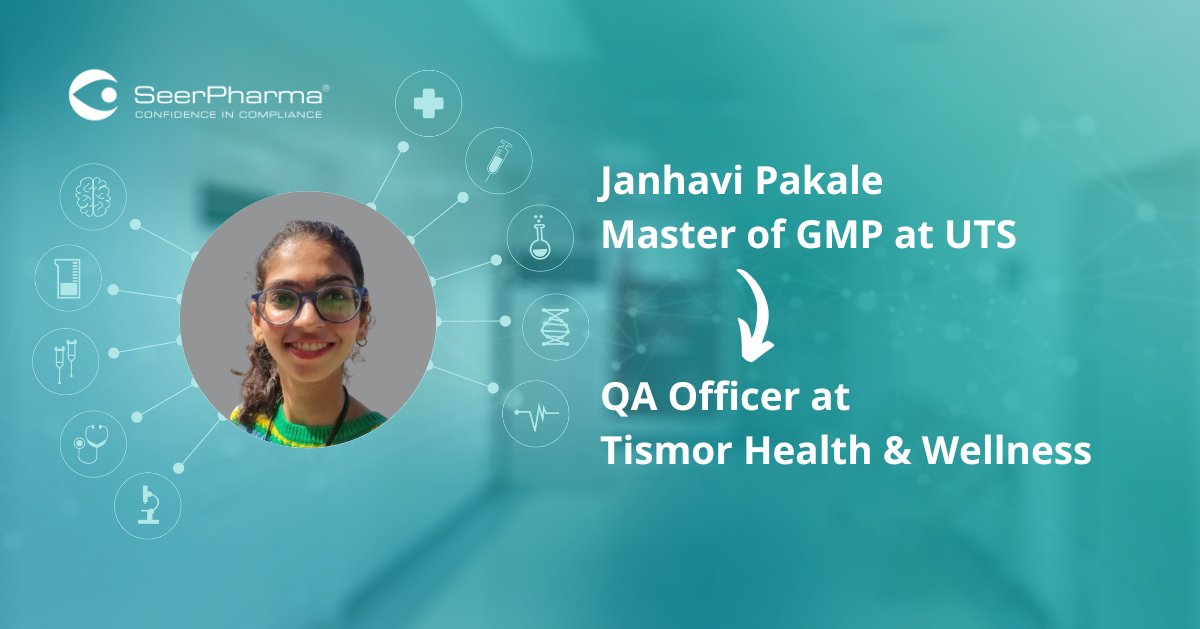
Before starting the Master of GMP course, as a fresher with no industry experience, I was hoping it would help me gain a deeper understanding of quality assurance and regulatory affairs in the pharmaceutical sector. During my Bachelor’s degree, I was introduced to these subjects, but only at a surface level, and I wanted more practical and in-depth knowledge of how these roles actually function in industry.
Once I started the course, it exceeded my expectations. The way the assignments were designed around real-world scenarios really helped me understand how quality systems and regulatory requirements are applied in practice. Working through these tasks gave me confidence and made the transition from a student mindset to a professional mindset much easier.
I also found it very valuable that the course introduced new and interesting subjects such as Medical Devices Regulatory Affairs, Clinical Trials Quality Assurance, and Computer System Validation (CSV). These areas were especially interesting to study and helped me explore different career pathways.
Overall, the course has been a very important part of my professional growth and has helped me feel more prepared and confident stepping into the industry.
One specific moment where my learning from the GMP course made a real difference was during my internship at GMP Pharmaceuticals while working on an Environmental Monitoring (EM) trending report. I was responsible for entering and analysing a large set of EM data and initially, it felt like a huge data entry task. However, concepts I had learnt in the course on data integrity, trend analysis, and risk-based decision making changed how I approached the task.
Instead of just entering the data, I started looking at the results more critically, checking for recurring patterns, understanding what results were 'alert' or 'action' level related, and considering what they could mean from a contamination control and risk perspective. That moment stood out to me because it showed how the GMP course had moved me beyond simply ‘doing tasks’ to actually thinking like a quality professional.
One of the most valuable aspects of the course for me was the way the assessments were designed around practical, real-world scenarios. The combination of in-class assessments and take-home assignments really stood out. The in-class tasks helped me build confidence in thinking critically on the spot and making decisions under time pressure, while the take-home assignments allowed for deeper analysis and research on the topic.
Another aspect I found especially helpful was the pre-class questions, where we were required to prepare a few questions based on that week’s material. This motivated me to come to class well prepared and actively engage with the content rather than passively listening. It also encouraged participation in class discussions and helped improve my confidence in speaking in front of others. Over time, this significantly improved my communication and presentation skills, which I feel are very important for professional roles.
Completing the GMP course has significantly changed the way I think about quality and compliance. Earlier, I viewed quality mainly as a set of rules or checks that needed to be followed. Through this course, I now see quality as a proactive mindset and a shared responsibility across the entire organisation, rather than just the role of the QA team.
Most importantly, it has changed how I see my own role in the pharmaceutical industry. I now understand that even junior or entry-level roles have a responsibility to uphold quality standards, ask questions when something does not seem right, and contribute to continuous improvement. This mindset has helped me approach tasks with more accountability and awareness of their broader impact.
If a potential student was unsure about enrolling in this GMP course, I would tell them that this course has lot of strengths.
First, the assignments made a huge difference for me, they are designed around real industry scenarios and really help in gaining practical knowledge rather than just theoretical knowledge.
The variety of subjects offered is also a strong point. Core areas like contamination control, aseptic processing, quality audits and quality risk management help build a solid understanding of GMP fundamentals. At the same time, subjects such as biotechnology, clinical research, medical devices, and computer system validation (CSV) widen your horizon and open up multiple career pathways, allowing you to explore what area interests you the most.
Finally, the two-semester internship opportunity built into the course is a major advantage. This helped me gain real industry experience and apply what I was learning in class to actual workplace situations, which made the learning much more meaningful and increased my confidence.
Upcoming Live and Free Online Information Sessions
Click here to learn more about GMP study at UTS